How Landscape Construction Works: A Step-by-Step Guide
A plain-English guide from Pineau Landscape Construction in Billerica, MA.
30+ years in the tradeLicensed & insuredOur own crew
Tell Us About Your Project
We follow up directly.
- Family-Runsecond generation
- Our Own Crewno subcontractors
- 30+ Yearsin the trade
- Licensed & Insuredcertificate on request
- Local to BillericaMerrimack Valley
What to expect during a landscape construction project from site visit through final cleanup.
A landscape project moves from an idea to a finished yard in stages, and the order matters. Build things out of order and you'll tear up new work to fix something below it. Here is how a typical project runs, and what you can do to keep it moving.
1. First conversation
Tell the contractor what you want to change, what bothers you about the yard, and roughly what you'd like to spend. Photos help. Note any problems, such as wet areas or a failing wall. On our jobs, we follow up directly.
2. Site visit
A site walk looks at access, grade, soil, water, trees, utilities and how the house meets the land. This is when a good contractor raises what you haven't thought about, like where the excavated soil will go, or how water will leave the new patio.
3. Design and scope
This can be a simple sketch or a full plan, depending on the job. Get the layout, materials and scope clear before you commit. For a larger project, phasing is worth discussing now.
4. Proposal
A proposal should spell out the work, materials, what's excluded, and how payment works. Read what isn't included as closely as what is.
5. Approvals
Depending on the job, you may need any of the following:
- A building permit for some walls and structures. Many retaining walls up to 4 feet are exempt, measured from the bottom of the footing, unless they carry a surcharge.
- Conservation commission review for work in or near wetlands, including the 100-foot buffer zone. A smaller project may need only a Request for Determination of Applicability. A larger one may need a Notice of Intent.
- Zoning checks on setbacks and lot coverage.
- HOA approval, if your neighborhood has one.
Allow extra time, especially for wetlands, because hearings run on a schedule.
6. Dig Safe
Massachusetts law requires notice to Dig Safe before excavation, even on private property. The excavator must pre-mark the area with white paint or stakes, then call 811 at least 72 business hours before digging. Tickets last 30 days. Dig Safe doesn't mark private lines, such as those to a shed, a sprinkler system or a septic tank, so tell your contractor about any you know of.
7. Site preparation and protection
Machines come in and access routes are set up. Trees and beds are protected. Old walls, walks or decks come out. Erosion controls go in if needed, particularly near wetlands or slopes.
8. Grading and drainage
This is the foundation of the whole job. Soil is moved, grades are set, and pipes and drains go in. It may not look like much progress, but it's the most important stage.
9. Hardscape
Walls, steps, patios and walks are next. Conduit and sleeves for lighting and irrigation go in before the surfaces do.
10. Irrigation and lighting
Main lines and wires run while the ground is still open.
11. Soil, planting and lawn
Loam gets spread and fine graded. Trees and shrubs go in first, then perennials, mulch and finally lawn. Seed in late summer if you can.
12. Final walk-through
Walk the job with the contractor. Check drainage, finishes and cleanup, and go over watering and care. New plantings and lawns need attention for their first year.
How long does it take?
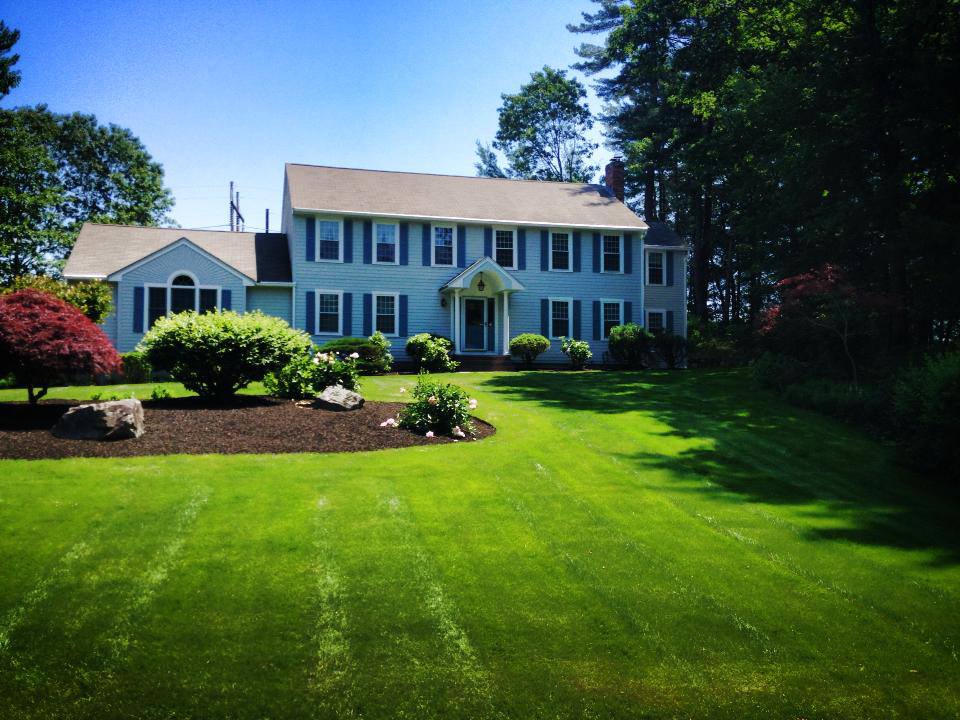
It depends on the job. Our Andover lawn project took two days. Our Andover patio and fire pit took three weeks, and our Reading wall, patio and lawn project took two to three weeks. Weather, approvals and buried surprises can all add time.
Helping the job go well
- Mark sprinkler lines, invisible fences and septic systems before the crew arrives.
- Clear cars, furniture and pets from access routes.
- Name one person to make decisions.
- Ask questions early, because changes are cheaper before things are built.
Ready to start? See landscape construction.
Sources: Massachusetts DPU, About Dig Safe; Massachusetts, Protecting Wetlands; 780 CMR 105.2, work exempt from permit. Rules change and towns differ, so confirm with your local office. This is general information, not legal advice.
Questions
What gets done first in a landscape project?
Approvals and Dig Safe come first, then site prep, grading and drainage, then hardscape, irrigation and planting.
Do I need to call Dig Safe?
Whoever is excavating has to give notice at least 72 business hours ahead. Your contractor normally handles it, but ask.
Does Dig Safe mark sprinkler lines?
Generally no. Dig Safe covers member utilities. Tell your contractor about private lines.
How long will my project take?
From a couple of days for a lawn to several weeks for bigger jobs. Our recent projects ran from 2 days to about 3 weeks.
Can you work near a wetland?
Possibly, once the right approvals are in place. Talk to your conservation commission early.
Need a Quote?
Pineau Landscape Construction serves Billerica and the surrounding towns. We follow up directly.