
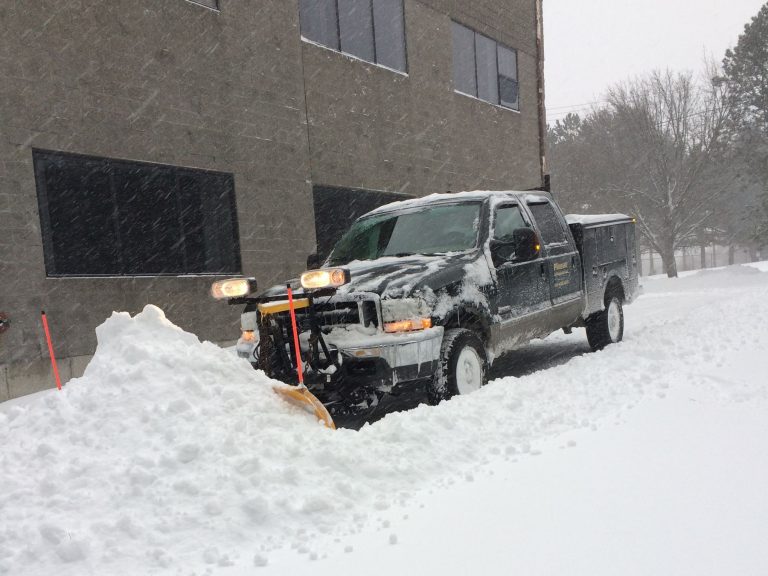
Commercial Snow Removal in Massachusetts: What to Expect
A plain-English guide from Pineau Landscape Construction in Billerica, MA.
30+ years in the tradeLicensed & insuredOur own crew
Get a Snow Contract Quote
We follow up directly.
- Family-Runsecond generation
- Our Own Crewno subcontractors
- 30+ Yearsin the trade
- Licensed & Insuredcertificate on request
- Local to BillericaMerrimack Valley
Massachusetts winters bring snowfall, ice storms and freeze-thaw cycles. This guide covers what commercial property managers need to plan for.
Commercial snow work in Massachusetts has its own pressures: freeze-thaw swings, coastal storms, older sites with tight layouts, and a legal standard that puts snow and ice responsibility on property owners. Here is what managers in the Merrimack Valley and northwest of Boston should keep in mind.
What a Massachusetts winter looks like
Boston's normal seasonal snowfall is about 49 inches, and towns inland often see more. The total tells only part of the story. Winters here swing between deep snow and thaw, so a site can get a nor'easter, a rain event and a hard freeze within one week. That cycle creates more ice work than a steady cold climate would. Storms can arrive from November through April, and the season doesn't follow a calendar.
Nor'easters are the storms that test a plan. They can drop heavy snow over a long period, often with wind that drifts cleared areas. Wet, heavy coastal snow also piles up quickly, and it pushes plow crews and stacking space to the limit.
The legal background
For many years, Massachusetts law distinguished between natural and unnatural accumulations of snow and ice. In Papadopoulos v. Target Corp. (2010), the Supreme Judicial Court ended that distinction. Owners and those in control of property now owe a general duty of reasonable care regarding snow and ice. The case came from a fall in a parking lot that had been plowed, where runoff had refrozen.
In practice, that makes it important to have a real plan, clear contracts, and records of what was done. Contracts vary on who carries which responsibility, so speak to your attorney and insurer about your own property. We can't give you legal advice, but we can tell you what we would look at on a site walk.
Where the snow goes
MassDEP's snow disposal guidance warns that plowed snow carries salt, sand, litter and automotive pollutants. As it melts, those can reach surface water and groundwater. The guidance points toward upland, pervious areas where meltwater can filter into the soil, and it warns against disposal in wetlands and water bodies. It also advises against disposal in wellhead protection areas of public water supplies and within 75 feet of a private well.
Many sites in this area back onto wetlands, ponds or streams, so plan stacking early. Avoid placing snow on catch basins or in drainage swales, where it can block the path for melt. Check your town's rules as well, because local bylaws can add to the state's guidance.
Salt and drinking water
Salt has become a real local concern in many communities. Some towns draw water from ponds or wells with protected areas around them. North Andover's Lake Cochichewick, for example, has a watershed protection overlay district in town zoning. If your property is in such an area, ask how ice control and salt storage should be handled, and tell your contractor before the season. Our ice management guide explains how to treat surfaces without overusing salt.
Timing and contracts
A lot of commercial contracts in this area start on November 1. Decisions are made in the fall, and property managers who wait for the first forecast may find fewer options. A contract should cover scope, service level, stacking, hauling and insurance. Our seasonal contracts guide walks through the terms.
Common Massachusetts site problems
- Older lots with tight turns and little stacking room
- Stone walls and granite curbing that are hidden under snow
- Mill buildings and older campuses with narrow access
- Shaded north sides that stay icy for weeks
- Wetland buffers close to the pavement edge
Where we work
Pineau is based in Billerica and takes commercial properties within about 20 miles. We favor towns northwest of Boston, and we do not work in New Hampshire or Suffolk County. We have more than 30 years in the trade, and our own crew does the work. See the towns we serve on our service area page, or read about our commercial snow removal.
Sources: MassDEP Snow Disposal Guidance; MassDEP road salt storage guidelines; Papadopoulos v. Target Corp., 457 Mass. 368 (2010), case summary; CBS Boston on the 1991 to 2020 NOAA normals; Lake Cochichewick overview. Rules change and towns differ, so confirm with your local office. This is general information, not legal advice.
Questions
How much snow does this area get in a normal winter?
Boston averages about 49 inches a season, and many inland towns see more. It varies widely from year to year.
Who is responsible for snow and ice on commercial property in Massachusetts?
Since the 2010 Papadopoulos decision, owners and those in control of property owe a duty of reasonable care. Ask your attorney how that applies to your lease and contracts.
Can we push snow into a wetland or pond?
MassDEP guidance warns against disposing of snow in wetlands and water bodies. Plan upland stacking areas ahead of time, and check local rules.
Do you work in Boston or New Hampshire?
No. We work within about 20 miles of Billerica, excluding Suffolk County and New Hampshire.
When do snow contracts usually start?
A lot of them start November 1, so most decisions happen in the fall.
Related Pages
Need a Quote?
Pineau Landscape Construction serves Billerica and the surrounding towns. We follow up directly.